

Wars can happen at any time. However, whenever conflict breaks out in the Middle East, market participants tend to jump straight to the same question: what does this mean for the US dollar?
It’s a fair question. The region matters. Oil matters. Safe-haven flows matter. And when missiles are flying, markets don’t exactly sit around calmly waiting for the next CPI print.
But in terms of forex, the mistake I see a lot of traders make is treating every geopolitical shock as a simple risk-off event. War breaks out, buy the dollar. Oil jumps, buy commodity currencies. Stocks fall, buy the yen. That sort of thinking might work for the first few hours, maybe even the first few days, but it is not enough if you’re trying to understand the bigger picture.
The Middle East conflict is a good reminder that FX markets rarely move because of one thing. They move because of how that one thing flows through inflation, interest rates, growth expectations, positioning, and investor confidence.
That is where the real analysis begins.
The first reaction is usually about safety. When markets get nervous, capital tends to move toward the most liquid assets. That often means the US dollar. Not because the US is untouched by global conflict, but because the dollar is still the center of the financial system. When investors are unsure, they want liquidity. They want deep markets. They want somewhere they can park capital quickly.
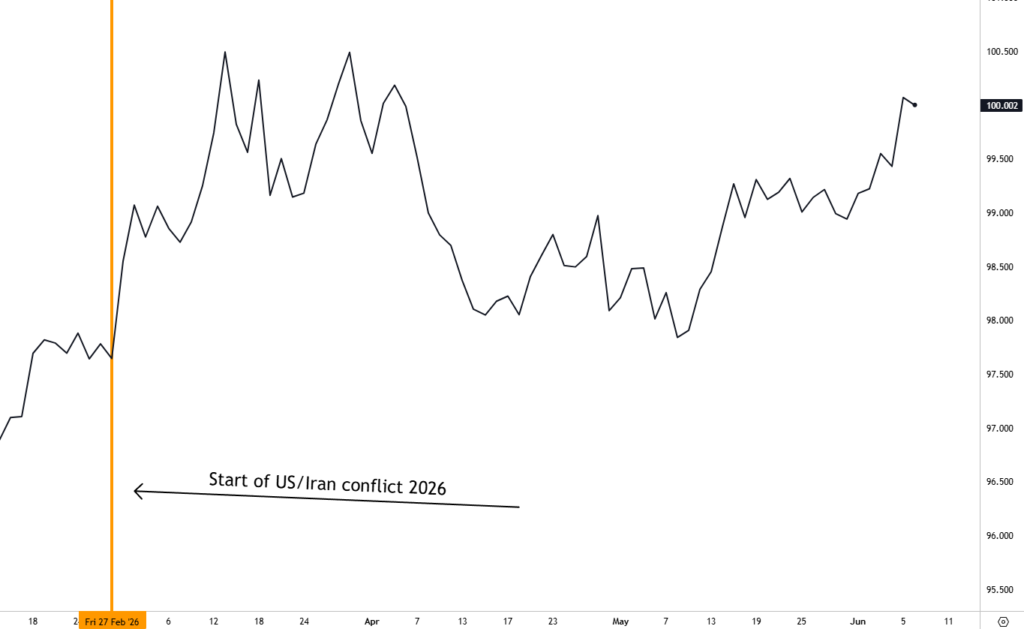
The Swiss franc often benefits too. It has that long-running safe-haven status, helped by Switzerland’s strong external position and reputation for stability. The Japanese yen used to be the classic safe haven as well, although these days it is a little more complicated. With Japan still dealing with a very different interest rate backdrop, the yen does not always behave as cleanly as older textbooks suggest.
That’s one of the first useful lessons here: safe havens still matter, but the macro backdrop matters just as much.
Then there’s oil.
The Middle East is not just another region on the map. It is central to global energy supply, and any sign that production, shipping lanes, or infrastructure could be disrupted is enough to push oil prices higher. For currency markets, that is important because oil does not just affect petrol prices. It feeds into inflation, central bank expectations, trade balances, and consumer spending.
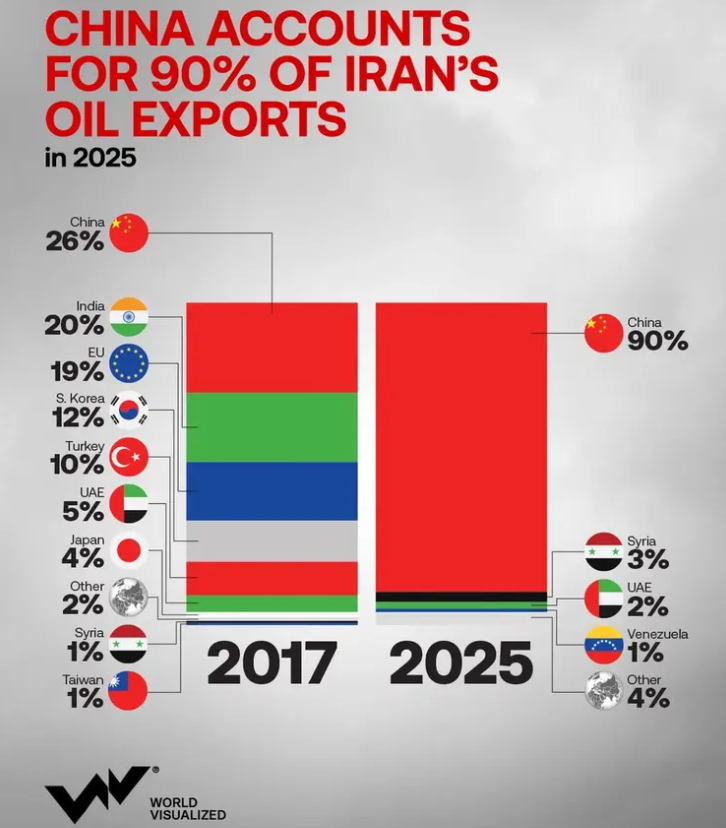
The interesting thing, and something most traders don’t realize, is that Iran actually doesn’t produce that much oil in relation to other oil-producing countries. Iran’s production in 2024 accounted for roughly only 4% of global supply. However… this is where it gets interesting..
Approximately 90% of Iran’s oil exports last year went to China..! As we all know, China is a very key player in macroeconomics due to its size, production and international trade.
How does this translate to the FX market?
If oil prices spike briefly and then settle down, the FX impact may fade pretty quickly. Markets have a habit of getting worked up, hedging the worst-case scenario, and then moving on when the situation does not escalate.
But if oil prices stay high, that is a different story.
Higher energy costs can make inflation stickier. That could force central banks to keep rates higher for longer, even if growth is slowing. It can also hurt countries that import a lot of energy, especially if their consumers are already under pressure. On the other side, energy exporters can get some support through stronger terms of trade.
This is why traders should avoid looking at geopolitical risk in isolation. The question is not just, “Is this bad?” Of course war is bad. The market question is, “How does this change the economic outlook?”
That might sound cold, but markets are not moral machines. They price transmission channels. They price consequences.
We saw this clearly with the Russia-Ukraine war. The initial reaction was fear, but the longer-lasting FX story was energy, inflation, European growth, and central bank policy. The war mattered for markets because it changed the macro environment. It hit Europe’s energy security, lifted inflation pressure, and forced investors to rethink the path for rates and growth.
The same framework applies to the Middle East.
If the conflict remains contained, the long-term FX impact may be limited. The dollar may catch a safe-haven bid, oil may move around, risk assets may wobble, and then markets may return to focusing on central banks and data.
But if the conflict spreads, or if shipping routes and energy infrastructure become more seriously threatened, then it becomes a much bigger FX story. At that point, traders need to think beyond the first move. A wider conflict could keep oil prices elevated, delay rate cuts, pressure energy importers, and increase risk premiums across emerging markets.
That is where the second and third-order effects become more important than the headline itself.
For everyday traders, I think the main lesson is this: do not chase the first emotional move without understanding what is driving it.
The first move after a geopolitical shock is often messy. It can be driven by stop-losses, hedging flows, thin liquidity, and traders rushing to reduce exposure. Sometimes that move continues. Other times it can fade just as quickly as it arrived.
The best approach in a situation like this is to take a step back and ask yourself a few basic questions;
- Is oil actually breaking higher, or is it just a knee-jerk spike?
- Are bond yields moving in a way that changes the rate outlook?
- Are central bank expectations shifting?
- Are equity markets showing real stress, or just short-term nerves?
- Are emerging market currencies selling off broadly, or is the reaction contained?
Those questions will usually tell you more than the headline.
Another thing to watch is positioning. If the market is already heavily long the US dollar, a geopolitical shock might create a sharp dollar rally at first, but that does not automatically mean there is a clean trade to chase. If everyone is already on the same side, the risk of a reversal can be high once the panic settles.
This is where experience matters. Good FX trading is not about reacting to every headline. It is about understanding which headlines actually change the macro story.
The long-term impact of this Middle East conflict will depend on whether it stays local or becomes economically contagious. That is the phrase I’d focus on: economically contagious.
A conflict becomes more important for FX when it spreads into energy markets, inflation expectations, trade flows, central bank pricing, and investor risk appetite. Until then, it may create volatility, but not necessarily a lasting trend.
For future wars and geopolitical shocks, the lesson is not to try to predict the next crisis. Nobody can do that with any consistency. The lesson is to have a framework ready when the crisis arrives.
First, identify the safe-haven reaction. Second, check the commodity channel. Third, look at inflation and rate expectations. Fourth, work out which economies are most exposed. And finally, be patient enough to separate the first panic move from the trade that actually has legs.
That is how I’d approach this type of market.
The Middle East conflict matters for FX, but not because every headline should be traded. It matters because it reminds us that currencies sit at the intersection of politics, energy, inflation, capital flows, and psychology.
Wars move markets, but not always in the way people expect.
And for traders, that is probably the most important lesson of all.
Disclaimer
The information provided in this article is for general informational and educational purposes only and does not constitute financial, investment or trading advice. The views expressed are the author’s opinions at the time of publication and may change without notice. They do not take into account your personal financial situation, objectives or risk tolerance.
Financial markets involve risk and past performance is not a reliable indicator of future results. Readers should conduct their own research and seek independent financial advice before making any investment or trading decisions.
The Venca Report accepts no liability for any loss or damage arising directly or indirectly from the use of the information contained in this publication.
Comments are closed